
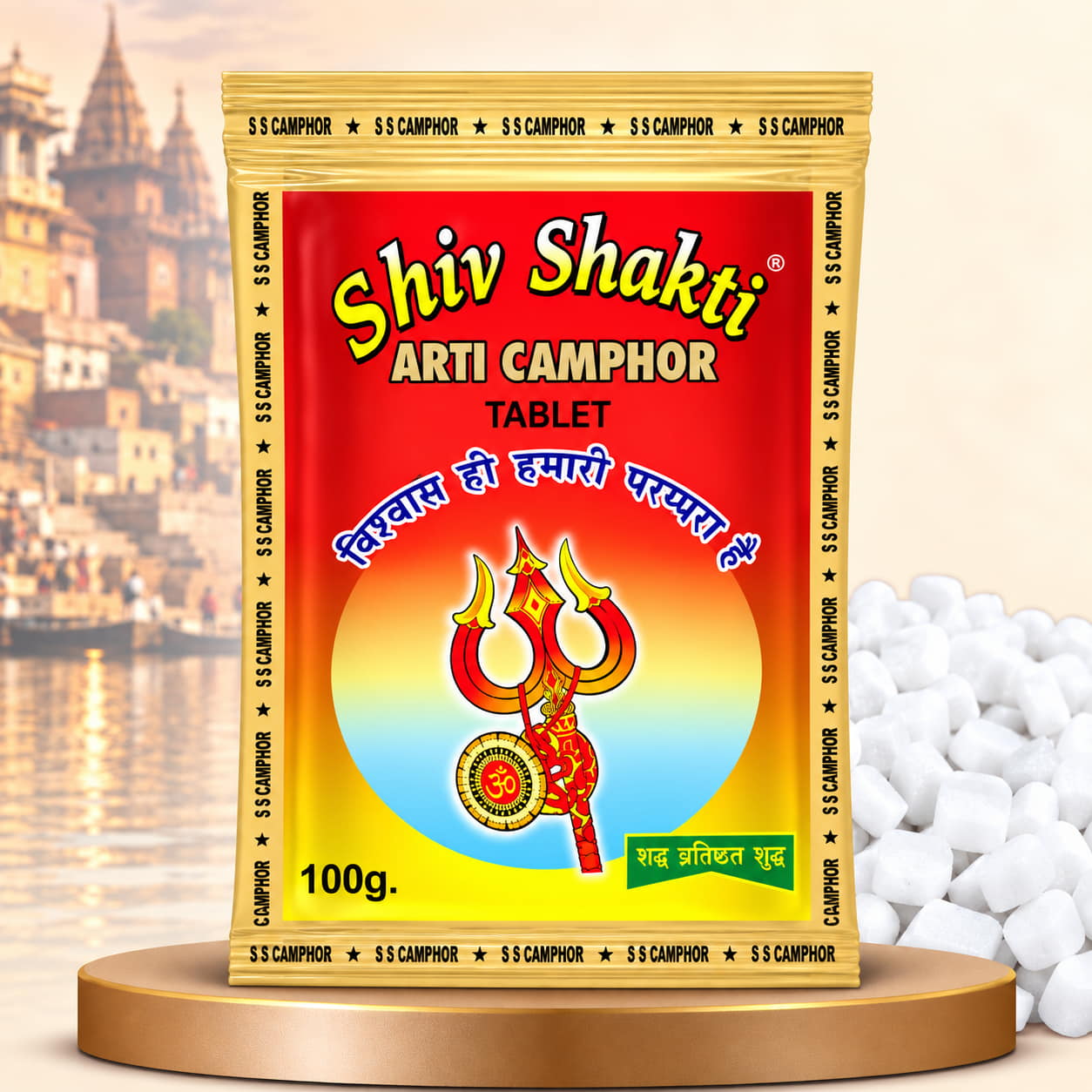
How to Check Camphor Purity at Home: 6 Tests That Take Two Minutes
Six quick tests — flame, residue, water, smell, touch and label — that separate 100% pure camphor from a wax-cut tablet, using…
Shiv Shakti Quality Desk 8 min
They are not three versions of the same thing. They burn differently, fill a room differently, and suit completely different parts of the day.
Walk into any puja shop and you will be shown four things that all seem to do the same job. They do not. The difference is not fragrance — it is how much smoke they make, how long they hold, and how big a space they can actually fill.
Here is how we explain it to customers who are buying for a specific room rather than out of habit.
A bamboo stick rolled in a scented paste. It burns for roughly 25 to 40 minutes depending on thickness, gives a light, steady stream of smoke, and scents a normal room without overwhelming it.
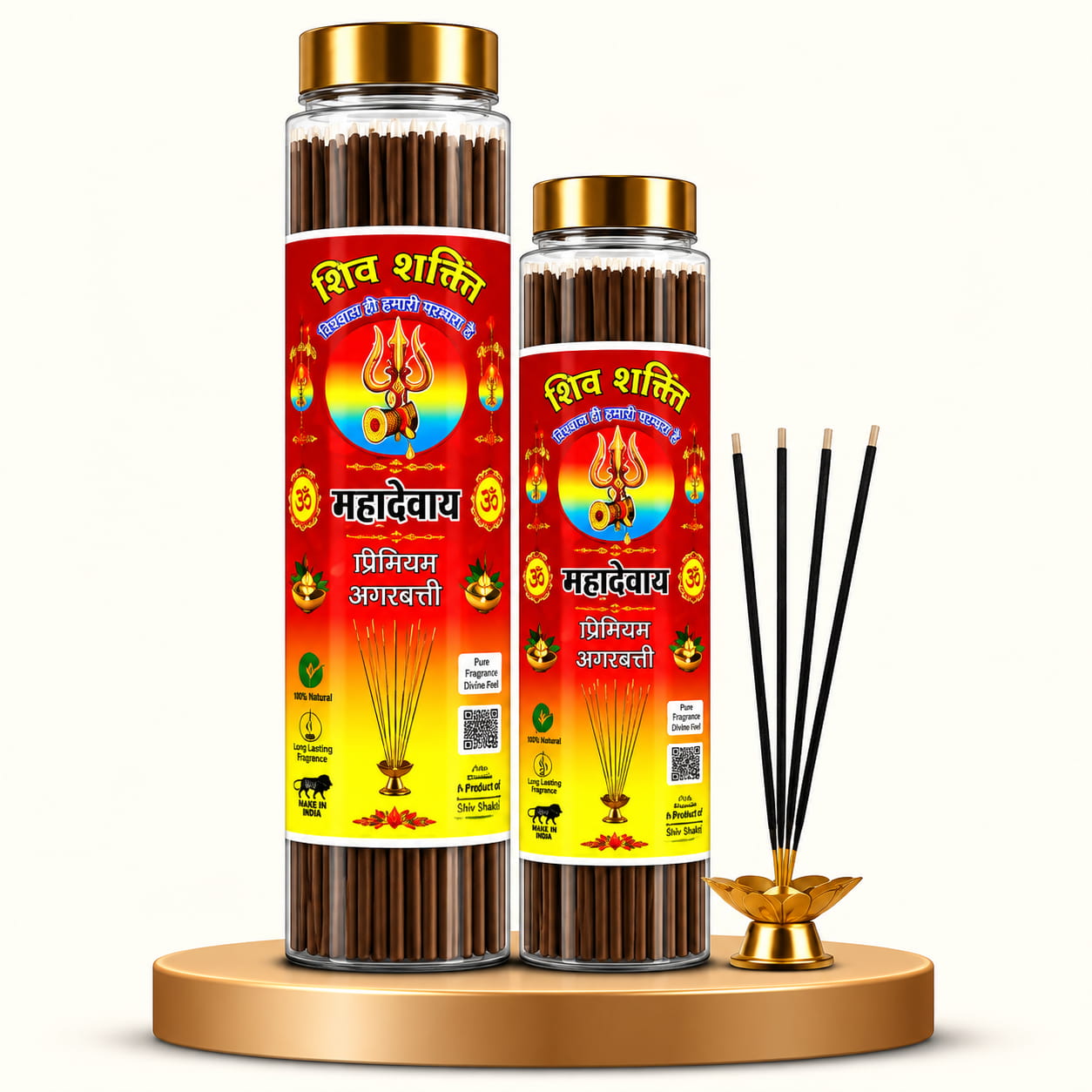
Best for: daily morning and evening puja, a living room, a shop counter, anywhere you want fragrance in the background rather than in the foreground. Our Shivpriyay agarbatti jar is the format most families reorder, and the zipper pouch is the one that survives being carried in a bag.
Watch out for: the bamboo core. A thin, badly made stick burns the bamboo faster than the paste and gives a papery edge to the fragrance.
A pressed cone of resins and herbal powders with no stick at all, so nothing burns except the fragrance material itself. A cone gives you 10 to 20 minutes of a much denser, warmer, more resinous smoke than agarbatti.
Best for: a quick, powerful fill — a puja room before guests arrive, a bedroom after the monsoon has left it damp, a hall at the start of a function. A 240g cone box lasts most homes a couple of months; the cone jar is the easier one to keep on a shelf.
Watch out for: the plate. Cones burn hot at the base and need a metal or stone holder, never a wooden shelf.
Bamboo-less sticks of the same resinous material, longer burning than a cone and stronger than agarbatti. This is what you smell in a temple courtyard. Our wet dhoop sticks and the Shivpriyay jar are both this family.
Best for: large rooms, open verandas, temples, and anyone who finds agarbatti too light.
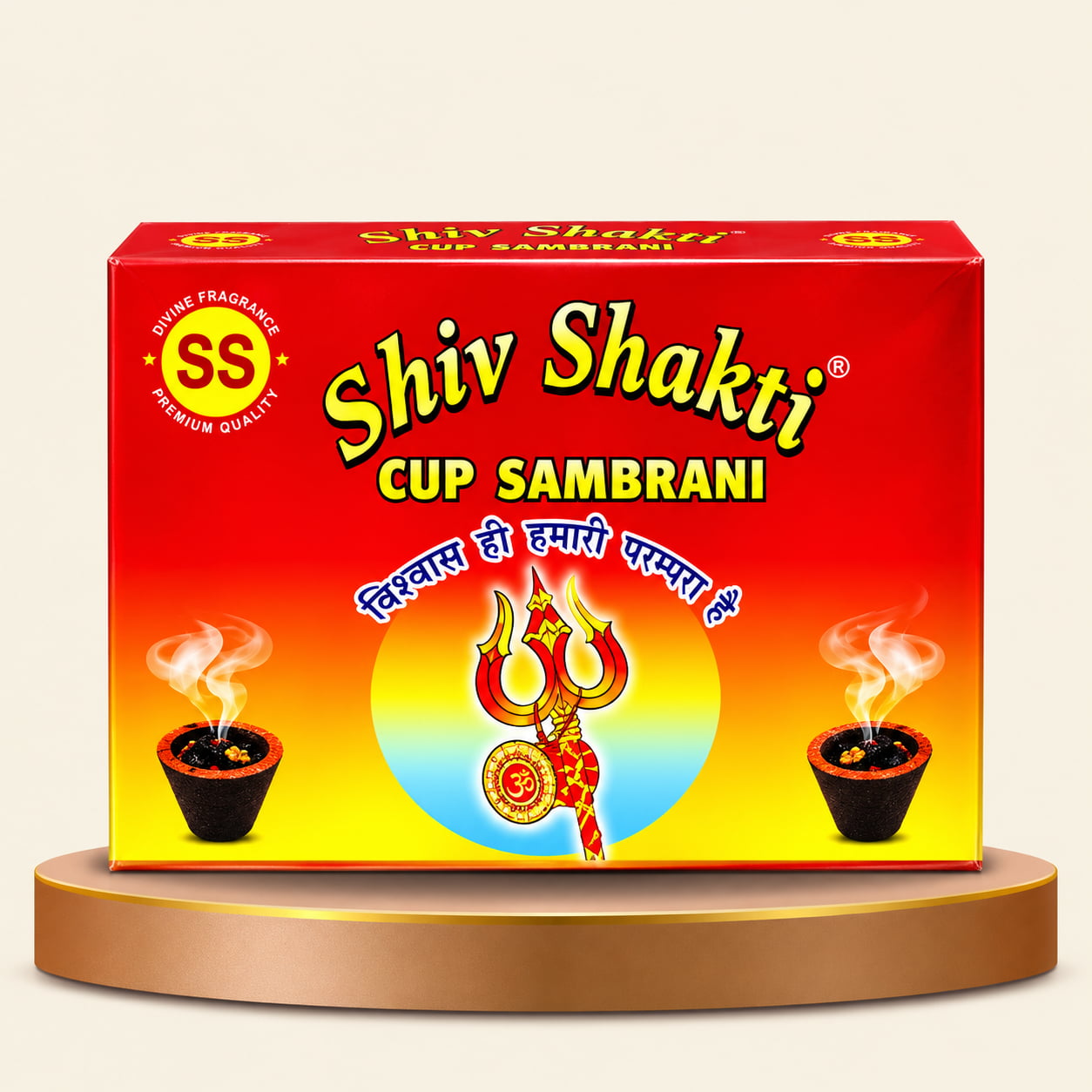
A small cup of benzoin resin that you light and leave. It catches in seconds, throws a thick, sweet, warm smoke for around 15 minutes, then stops. Traditionally it closes the evening aarti and is carried through the house once.
Best for: the end of the day, wardrobes and cupboards, and rooms that have been shut up. A 150g cup box holds enough for a month of evenings.
Watch out for: the smoke volume. Sambrani is the heaviest of the four. Crack a window if the room is small.
| Format | Burn time | Smoke | Best room | Needs |
|---|---|---|---|---|
| Agarbatti | 25–40 min | Light, steady | Any room, daily use | A stand |
| Dhoop cone | 10–20 min | Dense, warm | Puja room, bedroom | Metal plate |
| Dhoop stick | 20–30 min | Strong, resinous | Hall, veranda, temple | Stand or ash bowl |
| Sambrani cup | ~15 min | Thick, sweet | Evening, cupboards | Metal plate, ventilation |
Camphor is not an incense at all. It is the flame in the aarti, not the fragrance in the room — it burns out in about three minutes and is meant to. If you want both, the usual order in an Indian home is agarbatti first, camphor aarti in the middle, sambrani to close. Our guide to lighting camphor for aarti covers that sequence properly.
Still undecided? Most families end up keeping one agarbatti pack and one dhoop or sambrani box for occasions. That combination covers almost everything.
Browse all incenseThe purity bench at our Gorakhpur workshop — the people who run the burn, residue and fragrance checks on every batch before it is sealed and boxed.
Pressed, cut and packed in our own Gorakhpur workshop — the exact packs mentioned above.
Still wondering
Agarbatti. A stick burns for roughly 25 to 40 minutes, while a dhoop cone gives 10 to 20 minutes and a sambrani cup about 15. Dhoop and sambrani trade burn time for a much denser, warmer smoke, which is why they suit a quick fill rather than background fragrance.
Considerably. Dhoop has no bamboo core, so everything that burns is fragrance material — resins and herbal powders. That makes it the right choice for large rooms, verandas and temples, and often too much for a small flat.
Many households do, traditionally at dusk to close the evening. Because it is the heaviest smoke of the four formats, burn it on a metal plate with a window open, and keep it away from anyone with a breathing condition.
More answers on our help centre.
More from Buying Guides and the rest of the journal.
Six quick tests — flame, residue, water, smell, touch and label — that separate 100% pure camphor from a wax-cut tablet, using…
What separates Bhimseni (natural) camphor from refined synthetic camphor — origin, smell, flame, price and the pujas each one is…
The right way to light camphor for a daily aarti — how much to use, where to place the lamp, which way to rotate it, and the five…