How to Check Camphor Purity at Home: 6 Tests That Take Two Minutes
Six quick tests — flame, residue, water, smell, touch and label — that separate 100% pure camphor from a wax-cut tablet, using…
Shiv Shakti Quality Desk 8 min
Both are pure. They are not the same thing, they do not cost the same, and most homes genuinely need only one of them.
Ask for camphor in Gorakhpur and you will be offered two things at very different prices. The cheaper one is not fake, and the dearer one is not a scam. They are two different products with two different jobs, and the confusion between them costs families money every year.
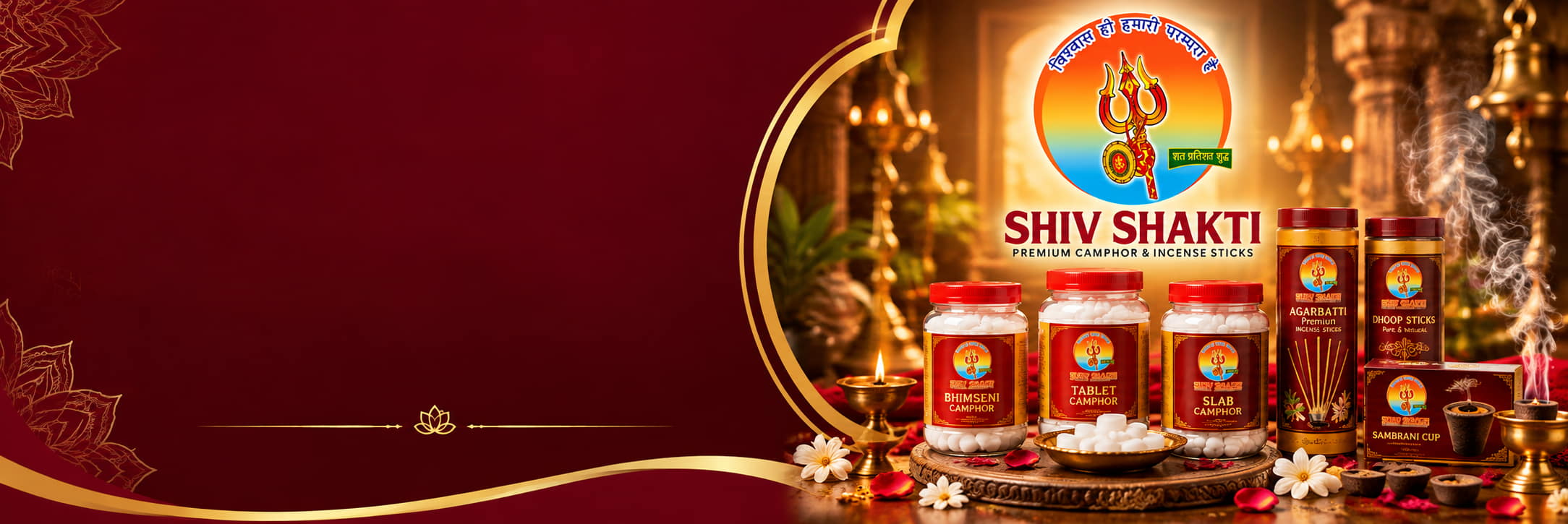
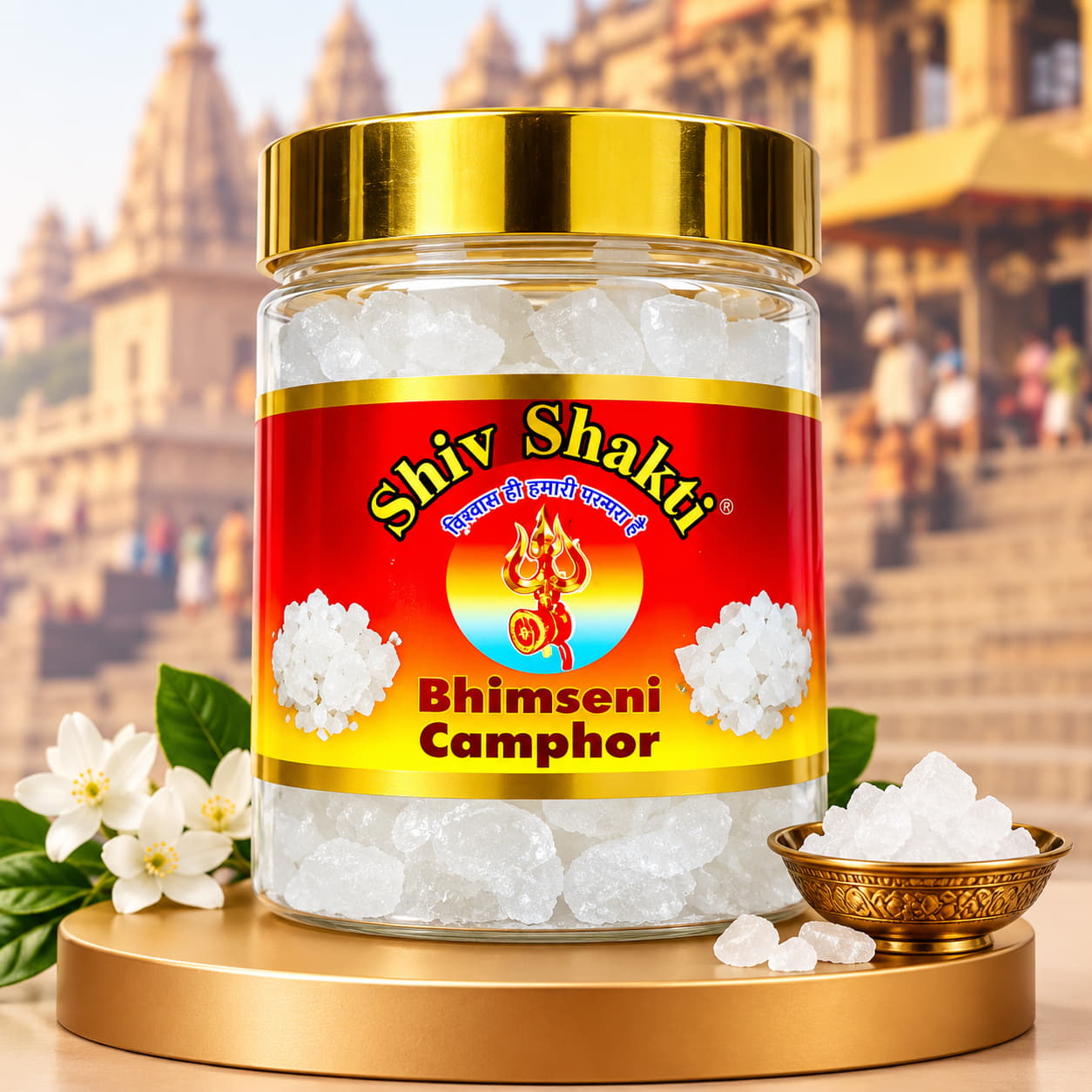
Bhimseni camphor — also sold as Bhimseni kapoor or natural camphor — is obtained from the camphor tree, Cinnamomum camphora. It arrives as irregular, brittle crystals rather than neat tablets, smells noticeably sweeter and more layered than refined camphor, and is traditionally the grade kept for special pujas, havan and prasad rituals where camphor is used in ways beyond the aarti lamp.
Because it comes from a tree and needs more processing to reach usable purity, it costs several times what refined camphor does. Our 100g Bhimseni pack exists for exactly this use — small, sealed, kept for occasions.
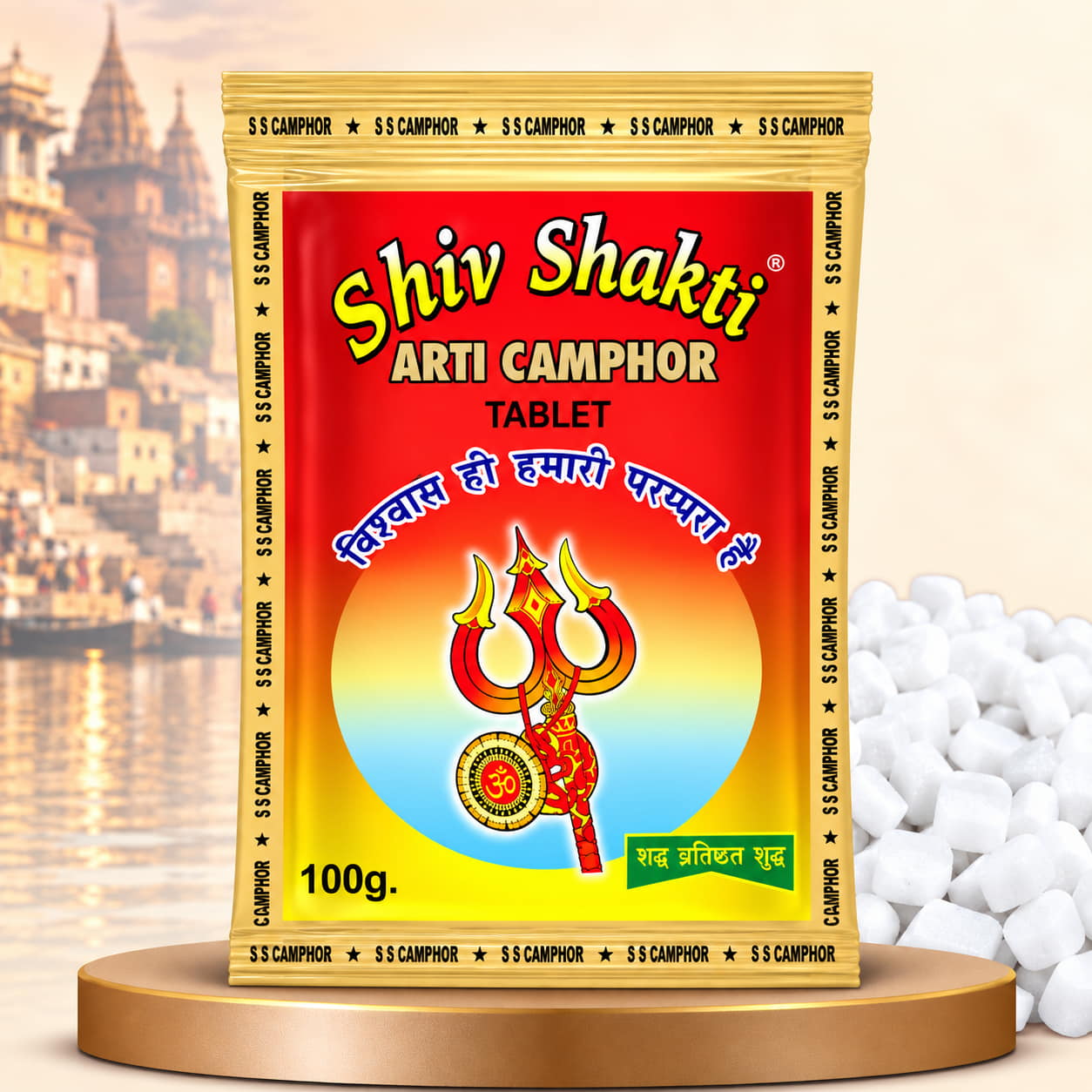
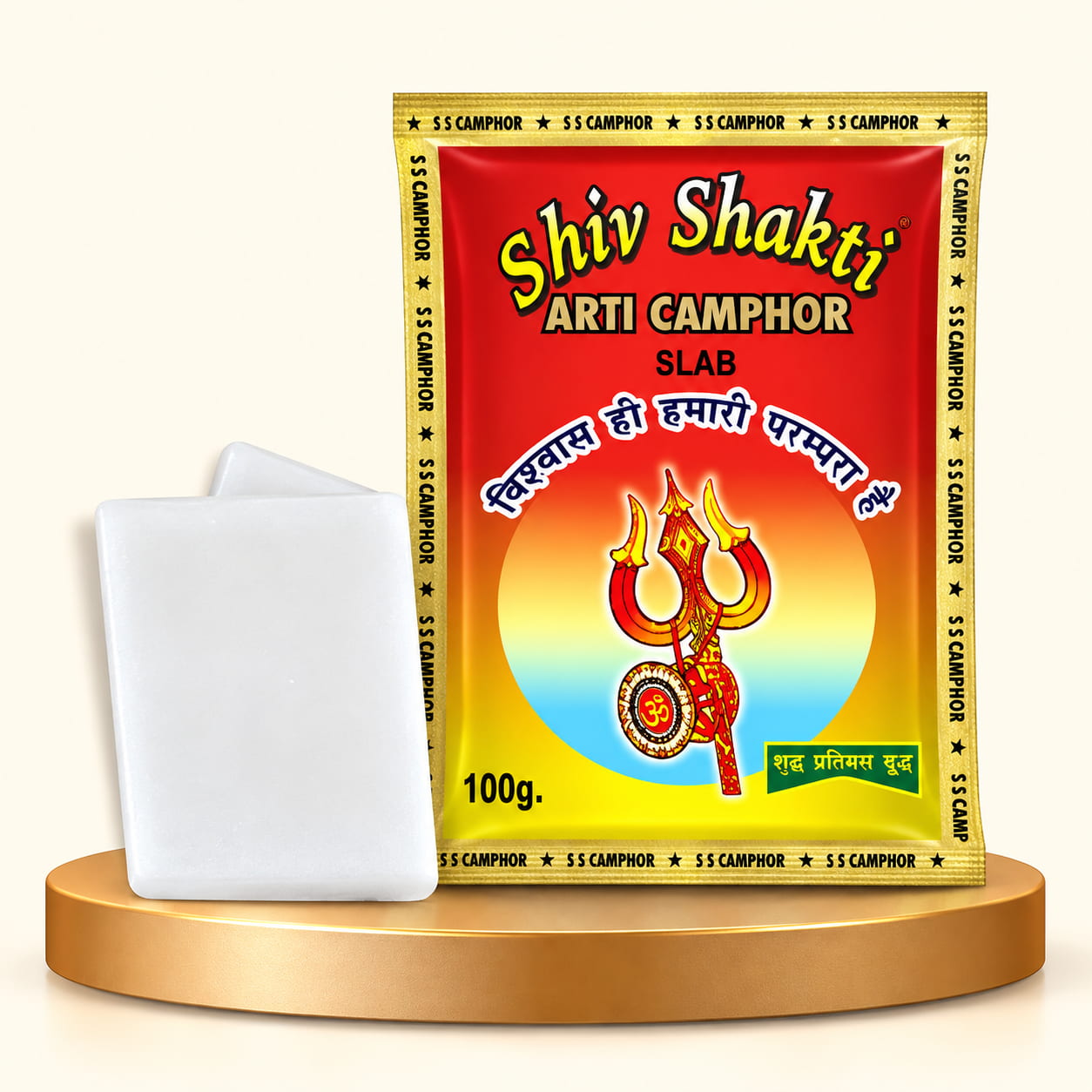
Refined camphor is chemically the same molecule, manufactured rather than tapped, and pressed into the tablets and slabs almost every Indian household burns daily. Pure refined camphor sublimates completely, holds a clean flame and leaves nothing on the plate — everything you want from an aarti lamp, at a price that makes daily use sensible.
This is what our Aarti Camphor Tablets and Aarti Camphor Slabs are made of. Crucially, pure refined camphor is not the same as adulterated camphor — the thing you actually need to avoid is wax, not refinement. The tests in our purity guide apply equally to both grades.
| Bhimseni (natural) | Refined aarti camphor | |
|---|---|---|
| Source | Camphor tree | Manufactured, then refined |
| Form | Irregular crystals | Pressed tablets and slabs |
| Smell | Sweeter, layered, softer | Sharp, clean, cooling |
| Flame | Slightly slower, softer | Fast, tall, steady |
| Residue | None when pure | None when pure |
| Price | Several times higher | Everyday |
| Typical use | Special puja, havan, prasad rituals | Daily aarti, temples, shops |
For a daily morning and evening aarti, refined camphor tablets are the right answer and have been for decades. Buying Bhimseni for routine use is like using festival silk for the school run — nothing is wrong with it, it is simply not what it is for.
Keep a small Bhimseni pack alongside for the days that matter: a family havan, a housewarming, Diwali puja, or any ritual where the camphor is being used as an offering in itself. Our Diwali checklist sets out roughly how much of each a family gets through.
A word on edible claims. Camphor sold for puja is not a food product and should not be eaten, whatever grade it is. If a ritual in your family involves ingesting camphor, buy only a grade explicitly certified for that purpose and ask your priest — we make puja camphor, and we say so plainly on every product page.
Bhimseni crystals sublimate faster than a pressed tablet because they have far more surface area. Keep them in the original sealed pouch inside an airtight container, away from heat, and buy the smallest pack that covers your year. Pressed tablets are more forgiving but still need a closed container — the rules for both are in our storage guide.
Most homes want both. A 100g tablet pack for the daily lamp, and a small Bhimseni pack kept for the occasions that deserve it.
Compare both gradesThe purity bench at our Gorakhpur workshop — the people who run the burn, residue and fragrance checks on every batch before it is sealed and boxed.
Pressed, cut and packed in our own Gorakhpur workshop — the exact packs mentioned above.
Still wondering
It is different rather than better. Bhimseni comes from the camphor tree and is traditionally kept for special pujas; refined camphor is manufactured and is what almost every household burns daily. Both can be completely pure, and both should leave a clean plate.
It is derived from a tree rather than manufactured, and it takes more processing to reach usable purity. That is also why it is sold in small packs — a 100g pack covers most families for a year of special occasions.
Puja camphor is not a food product and must not be eaten or added to drinking water. If a ritual in your family involves ingesting camphor, buy only a grade explicitly certified for that use and ask your priest. Everything we make is for worship, and it says so on every pack.
More answers on our help centre.
More from Buying Guides and the rest of the journal.
Six quick tests — flame, residue, water, smell, touch and label — that separate 100% pure camphor from a wax-cut tablet, using…
A practical comparison of agarbatti, dhoop cones, dhoop sticks and sambrani cups — burn time, smoke, fragrance strength and the…
The right way to light camphor for a daily aarti — how much to use, where to place the lamp, which way to rotate it, and the five…