


The Science of a Clean Burn: Why Pure Camphor Leaves No Black Residue
Sublimation, soot and the chemistry of a clean aarti flame — why 100% camphor disappears entirely while a wax-cut tablet blackens…
Shiv Shakti Quality Desk 6 min
Seven steps, one rule: nothing goes into the press except camphor. This is what happens between the sack and your puja thali.

People assume camphor making is one machine and a packing table. It is closer to seven small decisions, and a bad answer at any one of them shows up later as a tablet that will not light or a plate that needs scrubbing. Here is the whole route, in the order it happens.
Raw camphor arrives as crystal. The first job is rejecting anything that is not — clumps that have absorbed damp, material that smells flat, and any batch that has been stored badly in transit. Camphor is easy to judge by nose at this stage, and it is far cheaper to reject a sack than to recall a batch.
Crystals that are too dry crumble in the press; crystals carrying moisture spit when burnt. The material is rested in a controlled room until it is even throughout. This is the least visible step and the one that most affects how a tablet lights three months later.
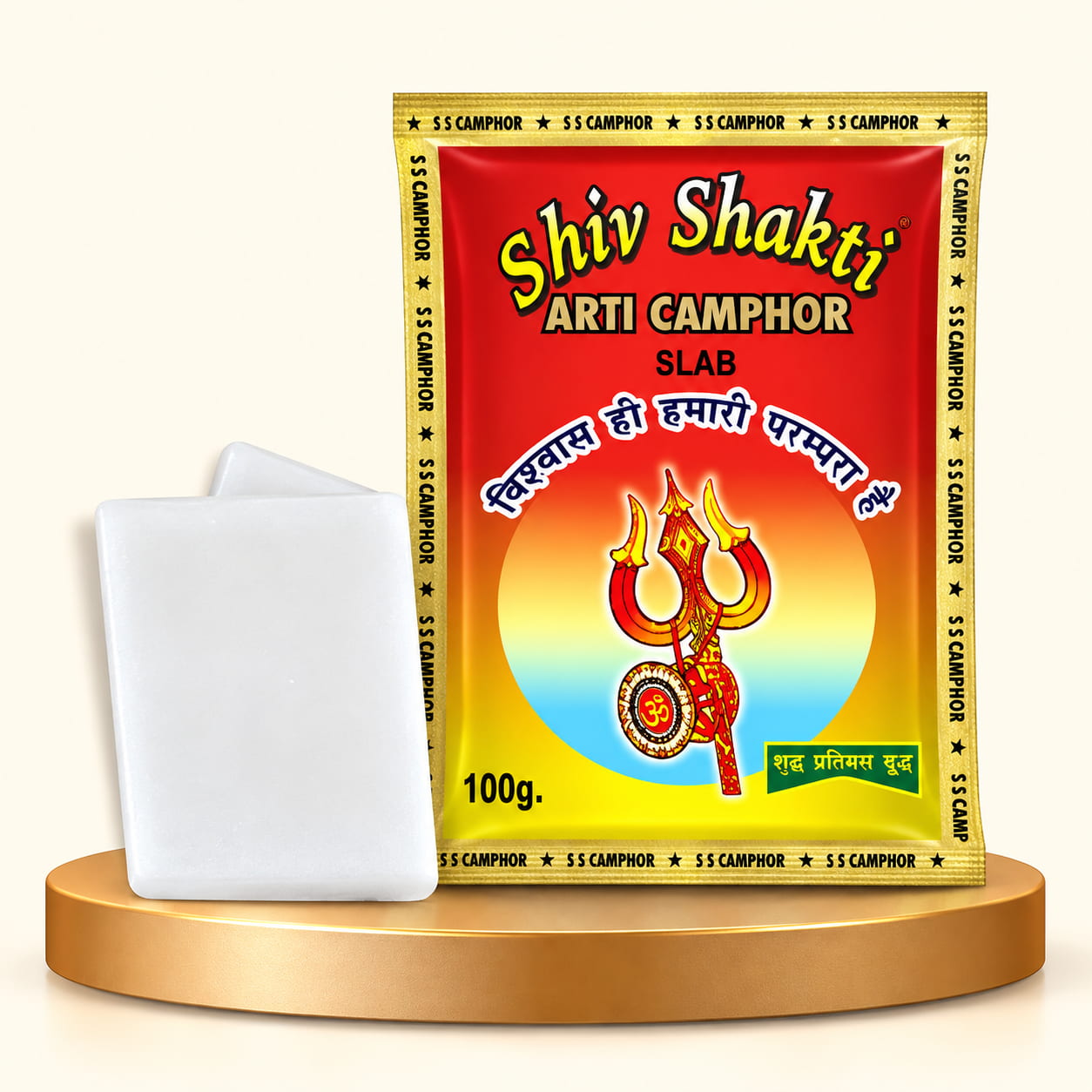
The material is pressed into shape — tablets, slabs or the loose pieces that go into pouches. Density is set per product, not per machine:
Nothing is added at this stage. No binder, no wax, no bulking powder. Camphor presses into a stable tablet on its own — fillers exist only to add weight, and they are exactly what causes the soot described in the clean burn article.
Fresh tablets are rested before packing. A tablet packed straight off the press keeps giving off vapour inside the pouch, which softens the pouch seal and leaves the tablet slightly under weight by the time it reaches a shop. A short cure stops that.
One tablet from every batch is burnt on a white tile in still air. Three things are recorded: time to ignition, whether the flame holds unaided, and the state of the tile afterwards. A clean tile passes; anything else stops the batch. It is the same test any customer can run at home, which is the point — our purity guide is simply this test written out for a kitchen.
Every great journey begins with a simple purpose — our only aim was to bring shuddh, divine camphor to every home and every temple.Sitaram Jaiswal, founder, 1987
Camphor sublimates continuously, so the pouch is not packaging, it is part of the product. Everything is sealed in moisture-proof film immediately, in the pack size it will be sold in — from a five-rupee pouch to a 500g family pack. Once a pouch is opened the clock starts again at home, which is why we wrote the storage guide.
Each pack carries a batch number tied to the sorting, curing and burn-test records for that run. If a shopkeeper in another district tells us a batch lit poorly, we can look at the sheet rather than guess. Thirty-eight years of doing this is mostly thirty-eight years of keeping records.
Agarbatti, dhoop and sambrani follow a different route — rolling, dipping, drying and a fragrance check rather than a burn test — but the same rule applies: nothing goes in to add weight. The agarbatti range and the dhoop cones and sticks are made on that basis, and this guide explains how they differ in use.
Made in Gorakhpur since 1987. Read the full story of the family and the factory behind these seven steps.
Our storySitaram Jaiswal founded Shiv Shakti in Gorakhpur in 1987, after a badly made tablet spoiled an aarti in his own home. He still signs off the batches that leave the workshop.
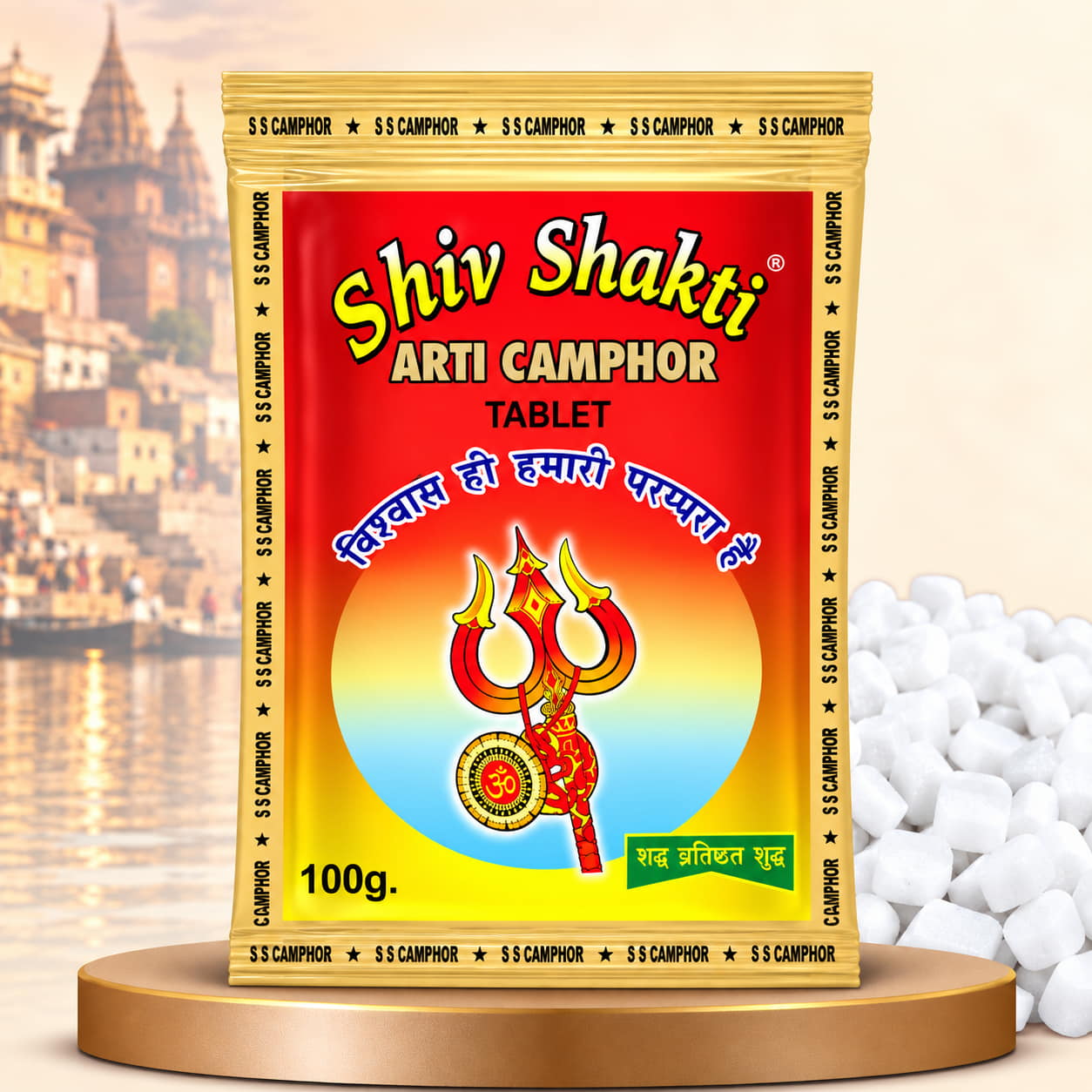
Pressed, cut and packed in our own Gorakhpur workshop — the exact packs mentioned above.
Still wondering
No. Camphor presses into a stable tablet on its own, so there is no binder, no wax and no bulking powder. Fillers exist to add weight, and weight is exactly what causes soot and residue.
One tablet from every batch is burnt on a white ceramic tile in still air. We record how quickly it lights, whether the flame holds unaided, and whether the tile is clean afterwards. A clean tile is the pass mark, and a failed batch does not ship.
Because camphor is evaporating from the moment it is made. The moisture-proof pouch is not packaging so much as part of the product — it is what keeps a 100g pack at 100g until you open it.
More answers on our help centre.
More from Quality & Craft and the rest of the journal.
Sublimation, soot and the chemistry of a clean aarti flame — why 100% camphor disappears entirely while a wax-cut tablet blackens…
Six quick tests — flame, residue, water, smell, touch and label — that separate 100% pure camphor from a wax-cut tablet, using…
The right way to light camphor for a daily aarti — how much to use, where to place the lamp, which way to rotate it, and the five…