

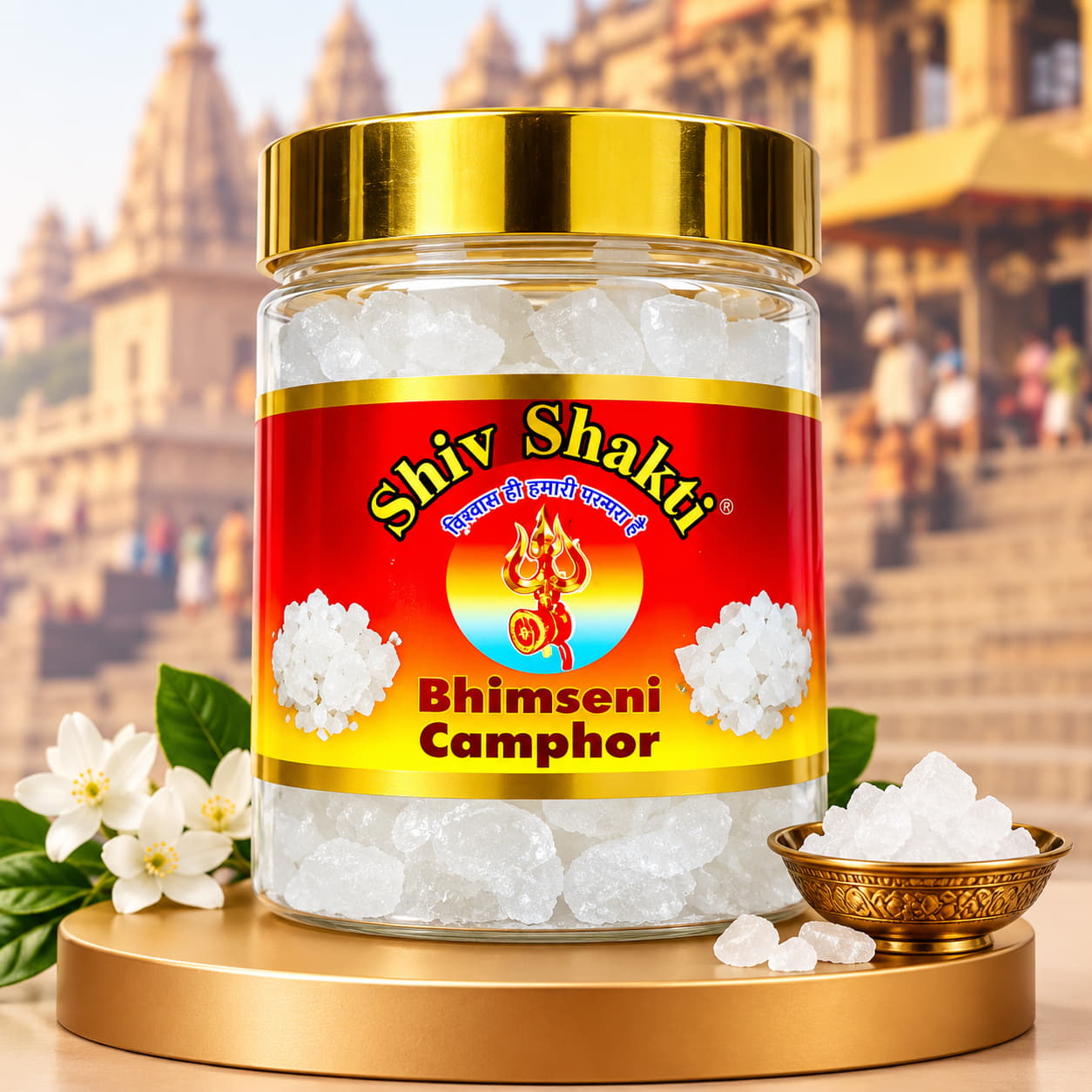
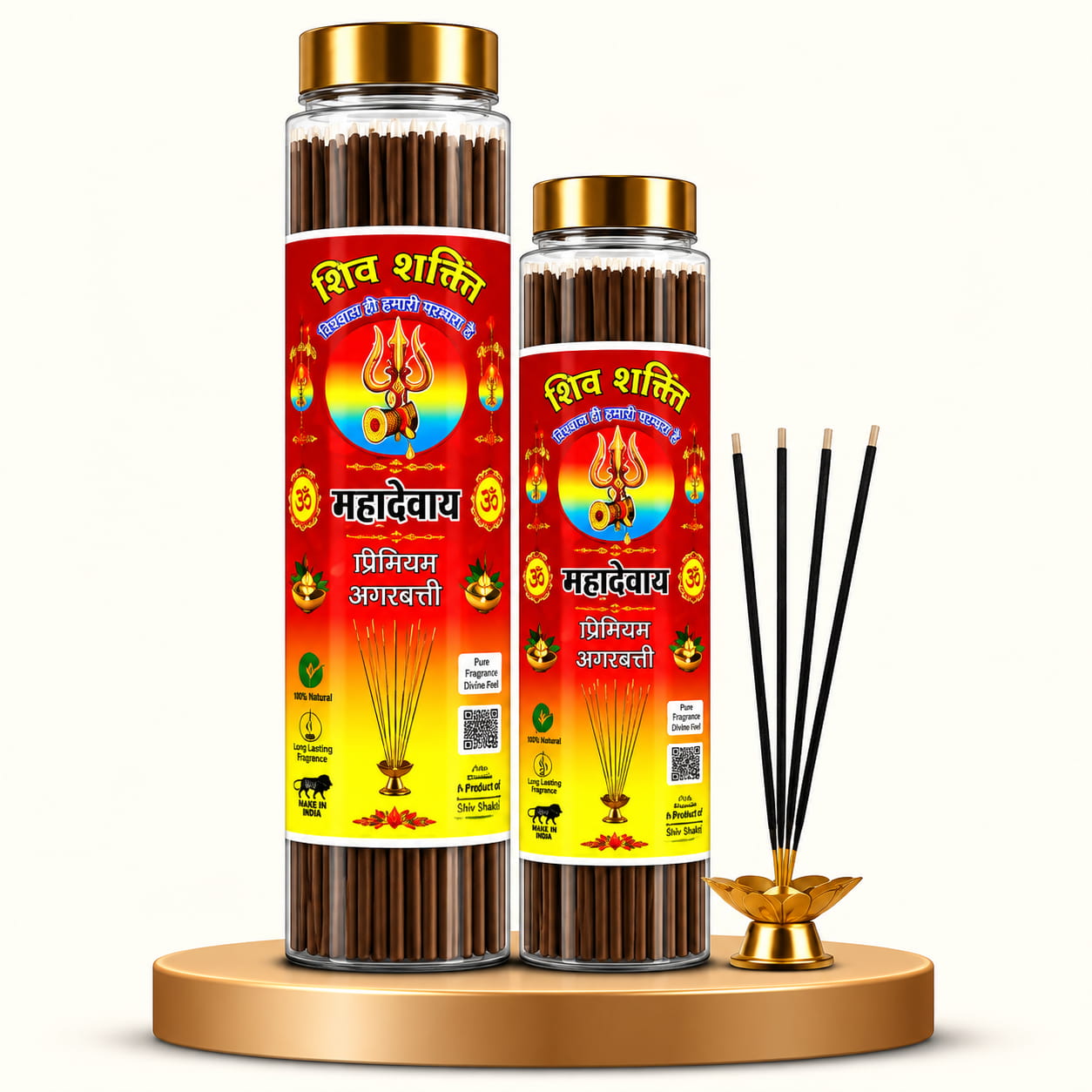
Agarbatti, Dhoop or Sambrani — Which Incense Actually Suits Your Home?
A practical comparison of agarbatti, dhoop cones, dhoop sticks and sambrani cups — burn time, smoke, fragrance strength and the…
Shiv Shakti Quality Desk 7 min
Pure camphor burns away completely and leaves nothing behind. Everything else is a compromise you can see, smell and feel — if you know where to look.
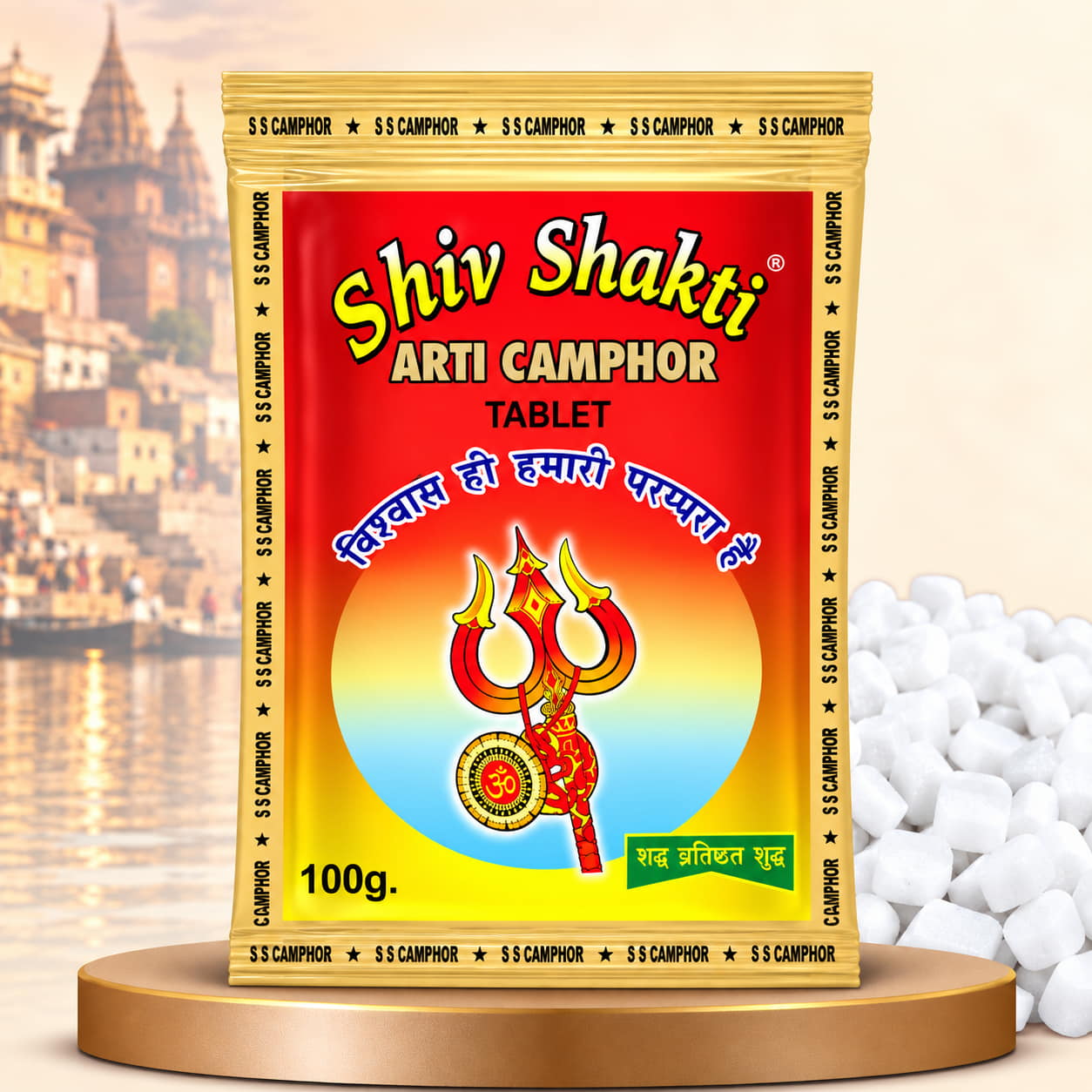
Camphor is one of the few things in an Indian home that is supposed to disappear. A good tablet lights on the first touch of a matchstick, holds a steady flame, and then is simply gone — no lump of grey wax on the plate, no black smear on the brass, no oily film on your fingers. If what you are burning leaves any of those behind, it was not pure camphor.
The trouble is that the pack rarely tells you. So here are the six checks we run on our own bench in Gorakhpur before a batch is ever sealed, written so you can run them at home with nothing more than a plate, a glass of water and a matchstick.
Adulterated camphor is usually cut with paraffin wax or a cheap synthetic filler. Both are there for one reason: weight. Wax costs a fraction of what camphor costs, it presses into a neat tablet, and it looks identical in the packet.
It behaves nothing like camphor in the flame. Wax needs a wick to burn properly, so on an open plate it melts, pools and smoulders. That is where the black soot on your idols comes from, and why the thali needs scrubbing after a week of aartis. It is also why a cheap tablet seems to last longer — it is not burning, it is puddling. You can read how we keep that out of our own tablets on the quality promise page.
Put one tablet on a clean steel or brass plate and light it.
The speed of ignition is the tell most people notice first. Our Aarti Camphor Tablets are pressed to a density that lights on the first touch precisely because there is nothing in them that needs coaxing.
Let the tablet burn all the way out, then look at the plate once it has cooled.
Pure camphor sublimates — it turns straight from solid to vapour — so a properly made tablet leaves a clean plate. You may see a faint white bloom, which is camphor that re-condensed; wipe it and it is gone. What you should never see is a waxy ring, a grey lump, or a black ring of soot.
Do this test on a white saucer. Soot and wax hide beautifully on a dark or patterned thali. On white, a bad tablet has nowhere to hide. We explain the chemistry behind it in why pure camphor leaves no black residue.
Drop a tablet into a glass of plain water at room temperature. Camphor is lighter than water, so it floats — and because it gives off vapour unevenly, a pure tablet will usually drift and spin gently on the surface. A heavily waxed tablet floats too, but sits dead still and slowly develops a dull, greasy skin around it.
This is a supporting test, not a verdict on its own. Use it alongside the flame and residue tests rather than instead of them.
Open the pouch and breathe in from a hand’s distance. Real camphor is sharp, cooling and almost medicinal — it clears the top of your nose immediately. A synthetic blend smells flatter, sweeter, and sometimes faintly of kerosene or candle wax under the fragrance.
Smell is also how you judge freshness. Camphor loses strength if it has been stored badly, which is a different problem from adulteration — our storage guide covers how to stop that happening in your own cupboard.
Rub a tablet between your thumb and forefinger for a few seconds, then wipe your hand on a tissue.
A pure tablet is also slightly brittle: press an edge and it should crumble crisply rather than dent like a candle.
Most of the work can be done before you get home. On a genuine pack you should be able to find the manufacturer’s name and full address, a batch or lot number, a net weight, and a clear statement of what is inside. Vague wording — camphor compound, camphor-based, pure quality camphor — is doing a lot of work to avoid saying 100% camphor.
| What you check | Pure camphor | Cut with wax or filler |
|---|---|---|
| Lighting | Catches at once | Needs repeated attempts |
| Flame | Tall, steady, clear | Low, orange, flickering |
| After burning | Clean plate | Waxy lump or black ring |
| Smell | Sharp and cooling | Sweet, waxy, flat |
| On the fingers | Dry, cool | Greasy film |
| On the pack | Maker, batch, net weight | Compound, blend, no address |
Stop burning it indoors, especially in a small puja room with the door closed. Soot from a waxed tablet settles on idols, photographs and walls, and it is the reason so many families end up polishing brass far more often than they should.
Then buy small the next time. A five-rupee pouch is enough to run all six tests before you commit to a family pack. If it passes, the 100g and 500g tablet packs work out far cheaper per aarti — see Bhimseni versus regular camphor if you are deciding which grade you actually need.
Not sure where to start? Our tablets, slabs and pouches are all pressed from the same 100% pure camphor — only the shape and the pack size change.
Shop pure camphorThe purity bench at our Gorakhpur workshop — the people who run the burn, residue and fragrance checks on every batch before it is sealed and boxed.
Pressed, cut and packed in our own Gorakhpur workshop — the exact packs mentioned above.
Still wondering
Burn one tablet on a clean white saucer and look at the plate once it has cooled. Pure camphor sublimates completely and leaves the plate clean. A waxy lump, a grey deposit or a black ring means the tablet was cut with paraffin or a filler.
Sometimes a faint white bloom appears around the burn spot. That is camphor vapour that re-condensed on the cool plate, and it wipes away with a dry cloth. It is not residue in the way wax is, and it never turns grey or sticky.
Not always, but weight is the usual reason for a low price. Paraffin costs far less than camphor and presses into an identical-looking tablet, so a pack that is noticeably cheaper per gram is worth testing before you burn it indoors. Buy a small pouch first and run the checks.
More answers on our help centre.
More from Buying Guides and the rest of the journal.
A practical comparison of agarbatti, dhoop cones, dhoop sticks and sambrani cups — burn time, smoke, fragrance strength and the…
What separates Bhimseni (natural) camphor from refined synthetic camphor — origin, smell, flame, price and the pujas each one is…
The right way to light camphor for a daily aarti — how much to use, where to place the lamp, which way to rotate it, and the five…