
The Complete Diwali Puja Checklist — and Exactly How Much Camphor You Need
A room-by-room Diwali checklist with realistic quantities for camphor, agarbatti, dhoop and sambrani, plus the order of the five…
Sitaram Jaiswal 7 min
Thirty-eight years of watching families do aarti has taught us that the camphor is rarely the problem. The plate, the placement and the timing usually are.

Aarti is the last minute of a puja, and it is the minute everyone remembers. A lamp that will not catch, or a flame that dies halfway around the idol, quietly spoils the whole thing. Most of the time the fix is not a better camphor — it is a small change in how the lamp is set up.
This is the method we teach at the counter in Gorakhpur, and the mistakes we see most often.
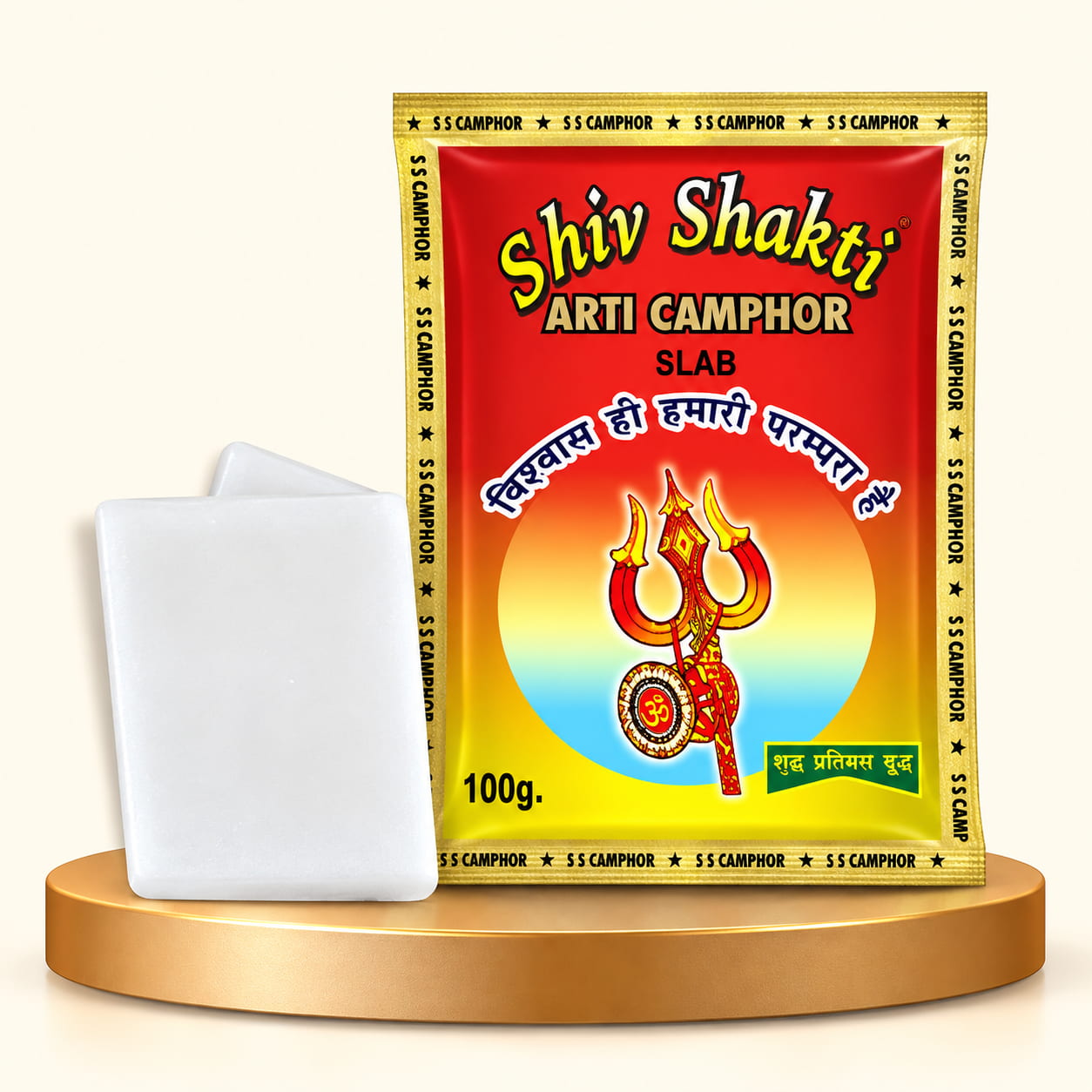
For a big puja, a camphor slab is easier than stacking tablets — it holds a larger, steadier flame and is the format most temples in Gorakhpur use.
People wash the thali, shake it once and set the camphor down. The tablet then sits in a film of water, which cools it below the point where it will vapourise. You end up burning three matchsticks and blaming the camphor. Wipe the lamp dry every single time.
Blowing on an aarti flame is discouraged in most household traditions, and it is a practical mistake too: it scatters half-burnt camphor across the plate, where it hardens into the white smear people mistake for residue. Let it finish, or cover it with a metal lid for a second.
Holding a tablet over a gas flame with your fingers is how burns happen. Camphor ignites suddenly and the whole tablet can catch at once. Use a matchstick, or a long lighter if the lamp sits high on a shelf.
Three or four tablets in a small room with the door shut makes the air heavy and sharp very quickly. One tablet is designed to be enough for a home aarti. If you want more fragrance rather than more flame, light a dhoop cone or a sambrani cup instead — that is what they are for, and our guide to agarbatti, dhoop and sambrani explains which suits which room.
Camphor sublimates at room temperature. An open pouch left beside the lamp loses strength within weeks, and what is left lights poorly — which is then blamed on quality. Reseal the pouch, or decant into a small airtight steel dabba. The full set of rules is in how to store camphor so it does not evaporate.
Let the lamp cool, then wipe it with a dry cloth. If you are cleaning soot off brass every few days, the camphor is the suspect, not your technique — run the checks in our six purity tests.
One tablet, one aarti, nothing left on the plate. That is the whole promise of a properly pressed camphor tablet.
See the aarti tabletSitaram Jaiswal founded Shiv Shakti in Gorakhpur in 1987, after a badly made tablet spoiled an aarti in his own home. He still signs off the batches that leave the workshop.
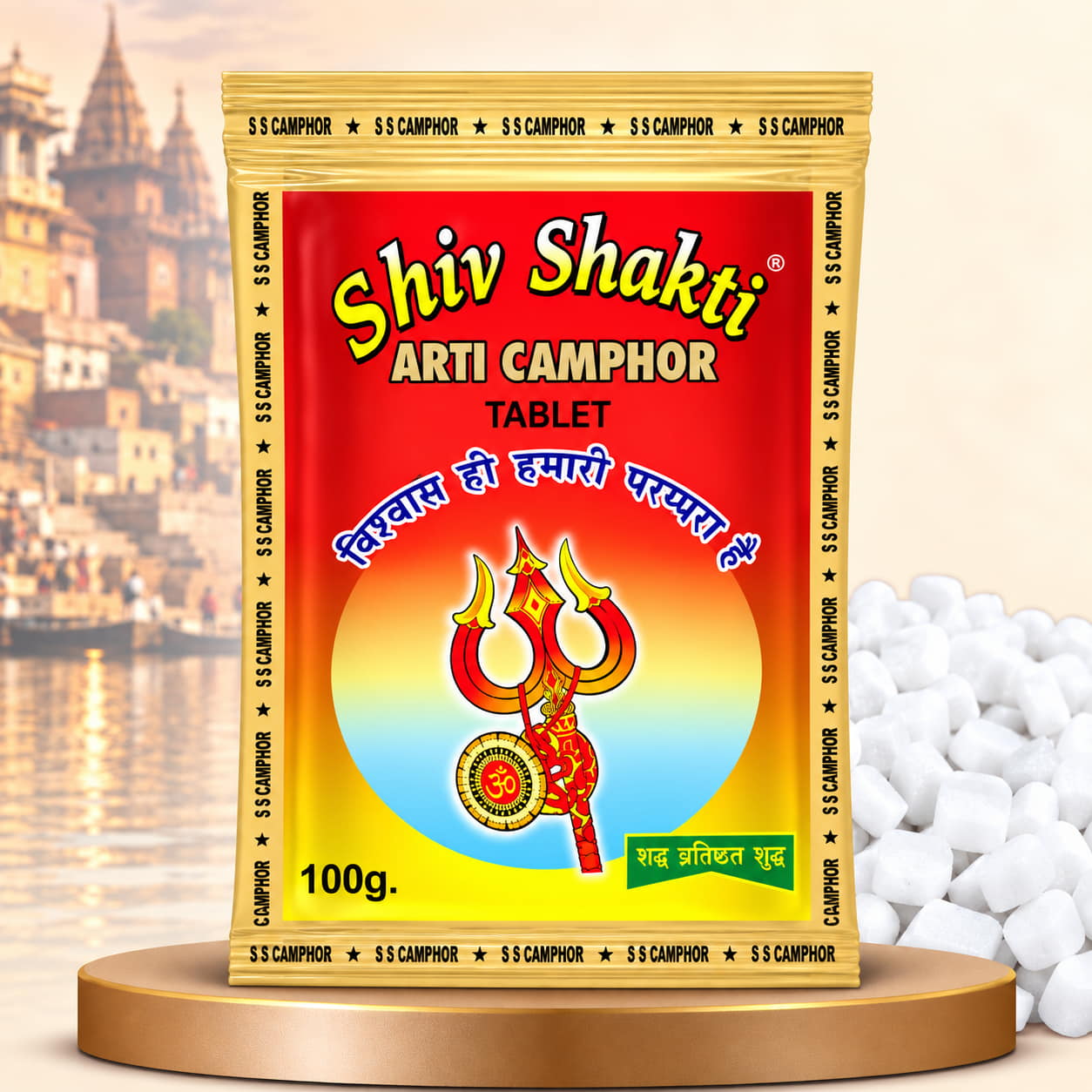
Pressed, cut and packed in our own Gorakhpur workshop — the exact packs mentioned above.
Still wondering
Nine times out of ten the lamp is damp. Camphor lights from the vapour at its surface, and a film of water or ghee under the tablet cools it below the point where that vapour forms. Wipe the lamp completely dry, place the tablet flat and touch the matchstick to its edge rather than its top.
One tablet is enough for a puja room and two for a hall. Burning three or four in a closed room makes the air heavy without making the aarti better. If you want more fragrance rather than more flame, light a dhoop cone or a sambrani cup instead.
No. Blowing on an aarti flame is discouraged in most household traditions, and it also scatters half-burnt camphor across the plate. Set the lamp down and let it finish on its own — a 1g tablet takes around three minutes.
More answers on our help centre.
More from Rituals & Puja and the rest of the journal.
A room-by-room Diwali checklist with realistic quantities for camphor, agarbatti, dhoop and sambrani, plus the order of the five…
Six quick tests — flame, residue, water, smell, touch and label — that separate 100% pure camphor from a wax-cut tablet, using…
A practical comparison of agarbatti, dhoop cones, dhoop sticks and sambrani cups — burn time, smoke, fragrance strength and the…