
How to Check Camphor Purity at Home: 6 Tests That Take Two Minutes
Six quick tests — flame, residue, water, smell, touch and label — that separate 100% pure camphor from a wax-cut tablet, using…
Shiv Shakti Quality Desk 8 min
An open pouch on a warm shelf can lose a noticeable share of its weight in a few weeks. None of that camphor was wasted in the lamp.
Camphor is the only thing in your puja cupboard that is slowly leaving on its own. It turns from solid straight to vapour at ordinary room temperature — the reason the whole shelf smells of it, and the reason a pouch bought in March feels lighter by June.
You cannot stop sublimation. You can slow it down a great deal, and these seven rules are most of the answer.
A folded-over pouch is not a seal. Air moves in and out every time the cupboard warms in the afternoon, carrying vapour away. Decant into a small steel or glass container with a gasket lid, or keep the original pouch inside such a container. Steel dabbas already in most Indian kitchens are ideal.
Camphor evaporates into whatever air is available. A handful of tablets in a large jar loses far more than the same handful in a small one, simply because there is more air to saturate. Step the container down as the stock goes down.
Heat speeds sublimation. The worst place in the house is exactly where most people keep it: on the puja shelf beside a lamp that is lit twice a day. Keep the working pouch there if you must, but keep the bulk stock in a cool internal cupboard, out of sunlight.
Not in the fridge. Camphor picks up moisture when it comes back to room temperature, and it will scent everything around it. Cool and dry, not cold.
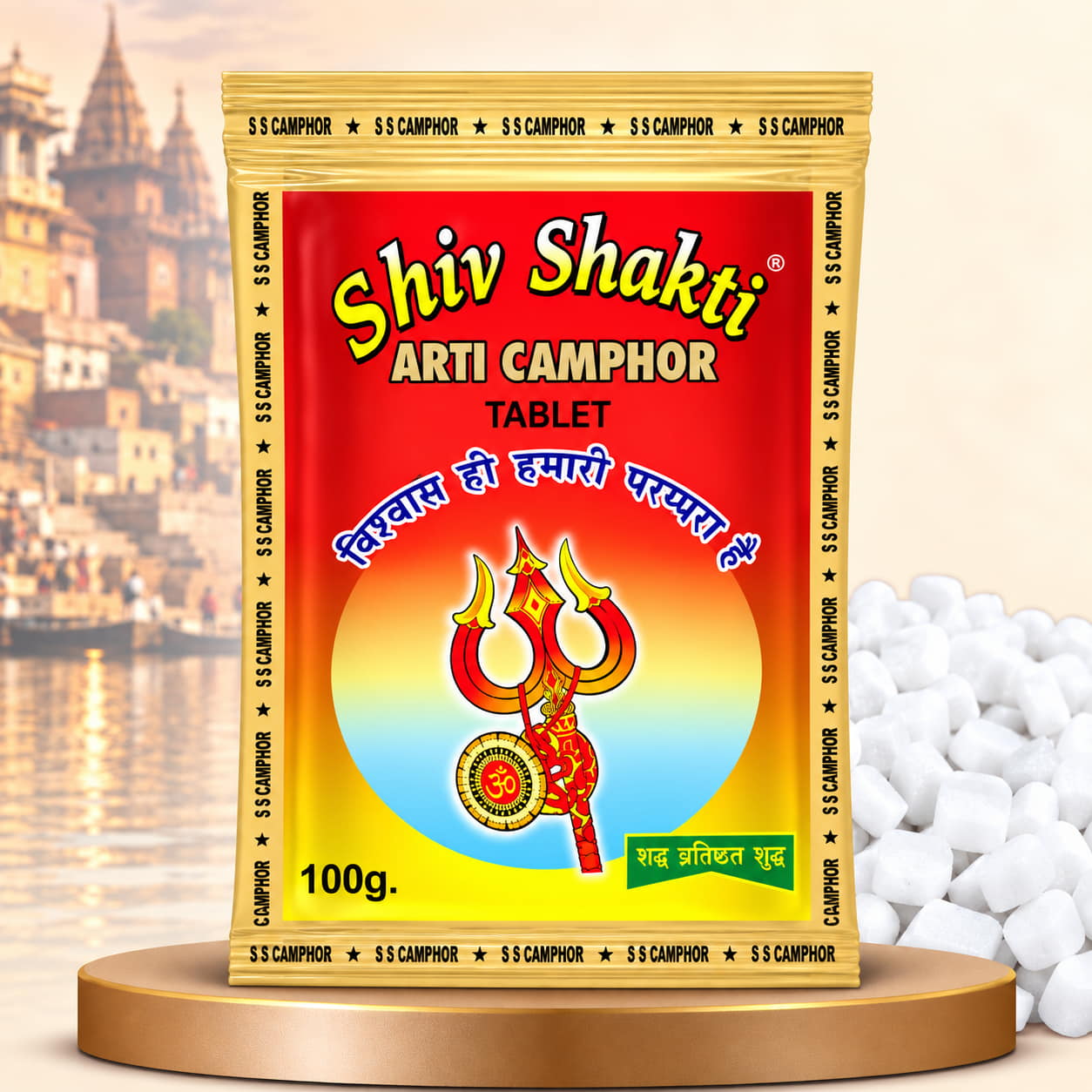
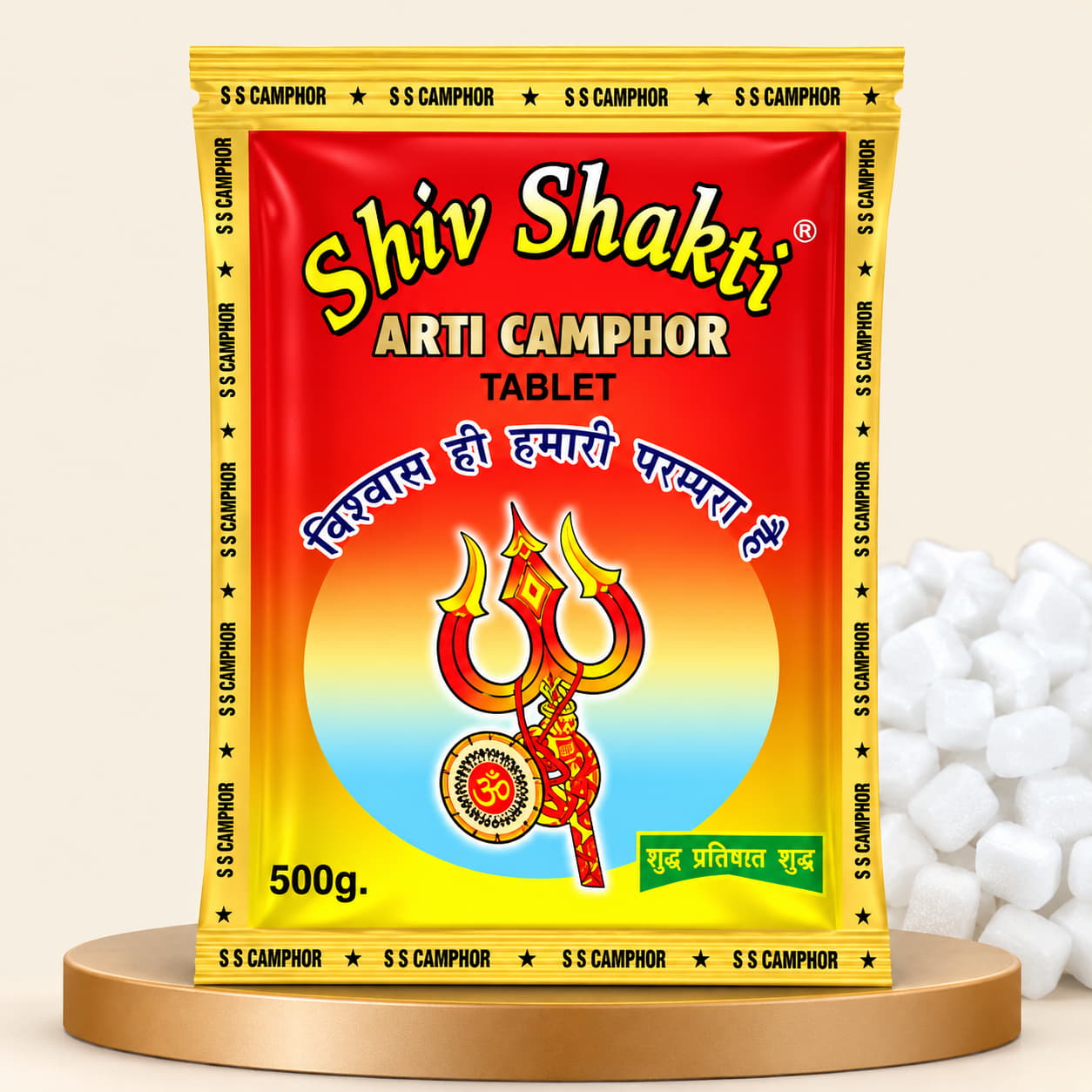
The cheapest camphor per gram is worthless if a quarter of it evaporates before you light it. As a rough guide, one aarti a day gets through about a gram of camphor, so a 100g pack is roughly three months for a single-lamp household. The tablet pack sizes exist for that reason; the ten-rupee pouch suits homes that light a lamp only on Tuesdays and festivals.
Shops and temples are the opposite case — there the loose pack makes sense because it turns over quickly. Our distributor guide covers stock rotation in more detail.
Camphor vapour travels and clings. Stored next to tea, ghee or atta it will flavour all three within days. Give it its own shelf, and never store it in a container you will later use for food.
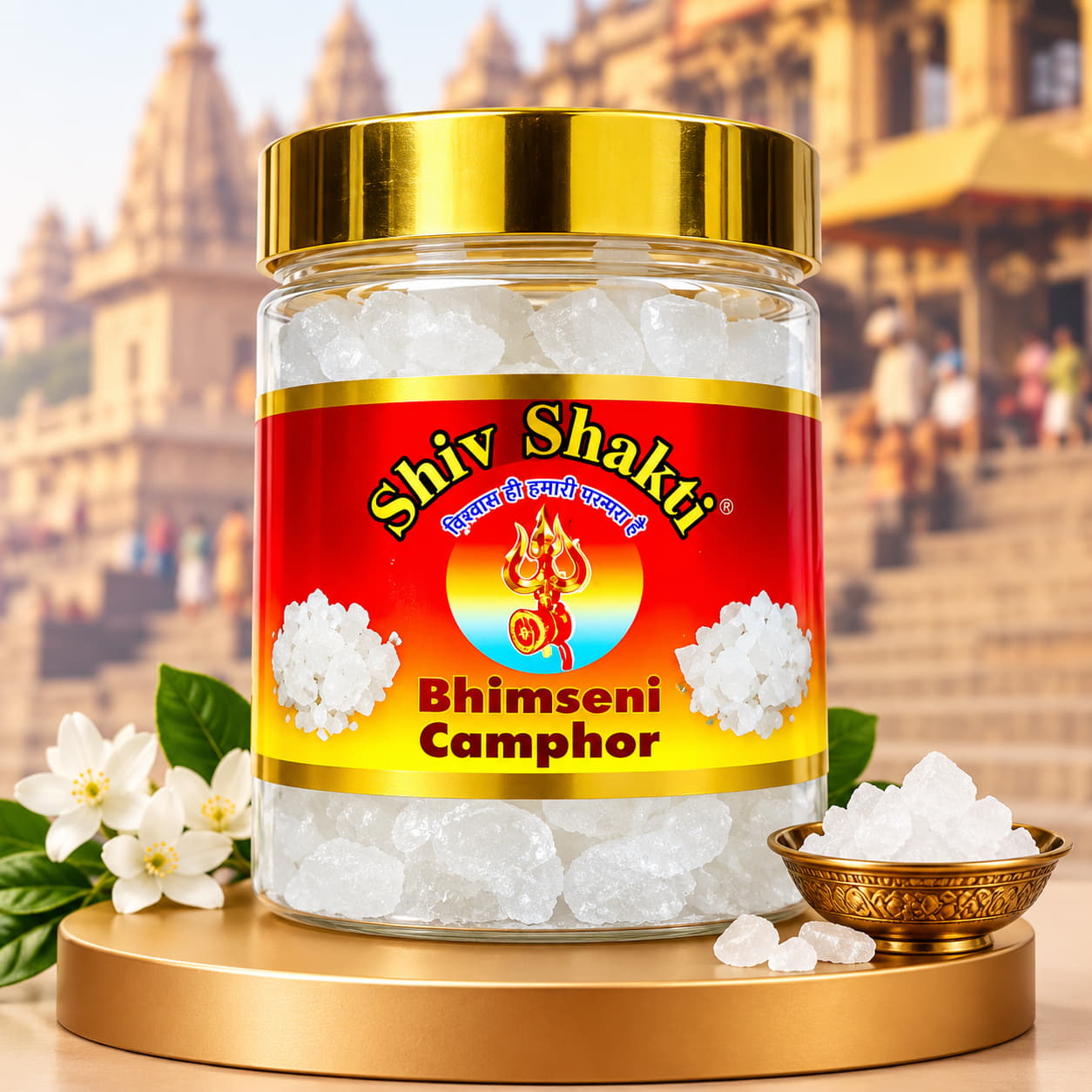
Irregular crystals have far more surface area than a pressed tablet, so natural Bhimseni camphor disappears noticeably faster. Keep it in the original sealed pouch inside an airtight tin, and buy only what you will use in a year. The full comparison between the two grades is in Bhimseni versus regular camphor.
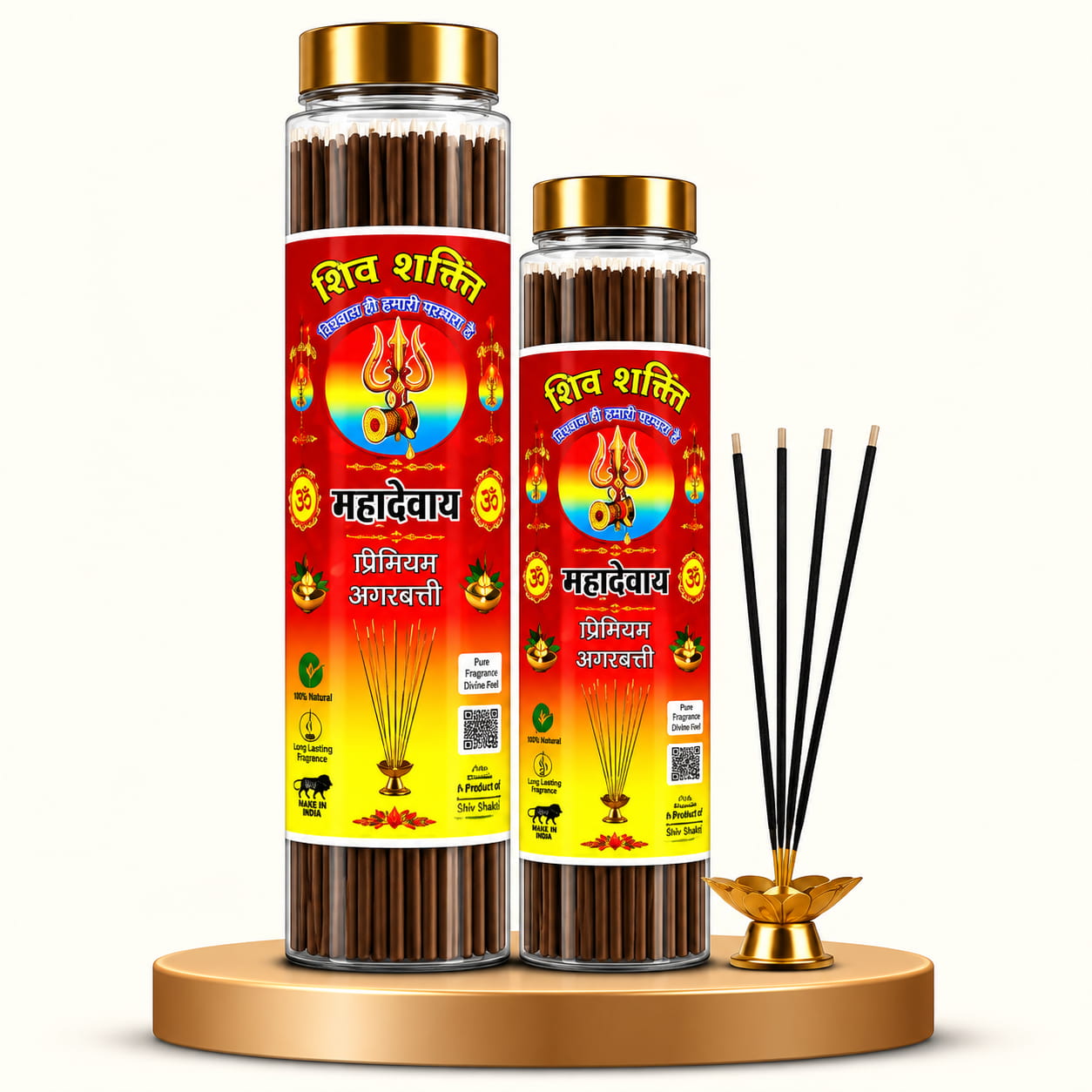
Incense does not evaporate; it dries out and goes dull. Sticks left loose in a drawer lose their top notes within a month. Keep agarbatti in its jar or zipper pouch, keep dhoop cones in their box away from damp, and never store either in a bathroom cupboard. In the monsoon, a spoon of dry rice in the container helps.
Old camphor is not dangerous, just weaker. The signs are a softer smell, tablets that have shrunk and lost their crisp edges, and a flame that takes longer to catch. If a tablet also leaves a mark on the plate, that is a different problem entirely — run the checks in our six purity tests.
Buying for a whole year? The 500g family pack is the lowest price per gram — worth it if you can store it properly.
See tablet pack sizesThe purity bench at our Gorakhpur workshop — the people who run the burn, residue and fragrance checks on every batch before it is sealed and boxed.
Pressed, cut and packed in our own Gorakhpur workshop — the exact packs mentioned above.
Still wondering
In an airtight steel or glass container, kept cool and dark, several months with very little loss. Left in a folded-over pouch on a warm puja shelf, it noticeably weakens within a few weeks, because camphor sublimates continuously at room temperature.
Better not to. Camphor picks up moisture when it returns to room temperature, and it will scent everything in the fridge. Cool, dark and dry is what you want — an internal cupboard, not a cold one.
Keep it sealed. Incense does not evaporate like camphor, it dries out and goes dull, so a jar or a zipper pouch beats a loose drawer. Avoid bathroom cupboards, and in the monsoon add a spoonful of dry rice to the container.
More answers on our help centre.
More from Care & Storage and the rest of the journal.
Six quick tests — flame, residue, water, smell, touch and label — that separate 100% pure camphor from a wax-cut tablet, using…
The right way to light camphor for a daily aarti — how much to use, where to place the lamp, which way to rotate it, and the five…
A practical comparison of agarbatti, dhoop cones, dhoop sticks and sambrani cups — burn time, smoke, fragrance strength and the…